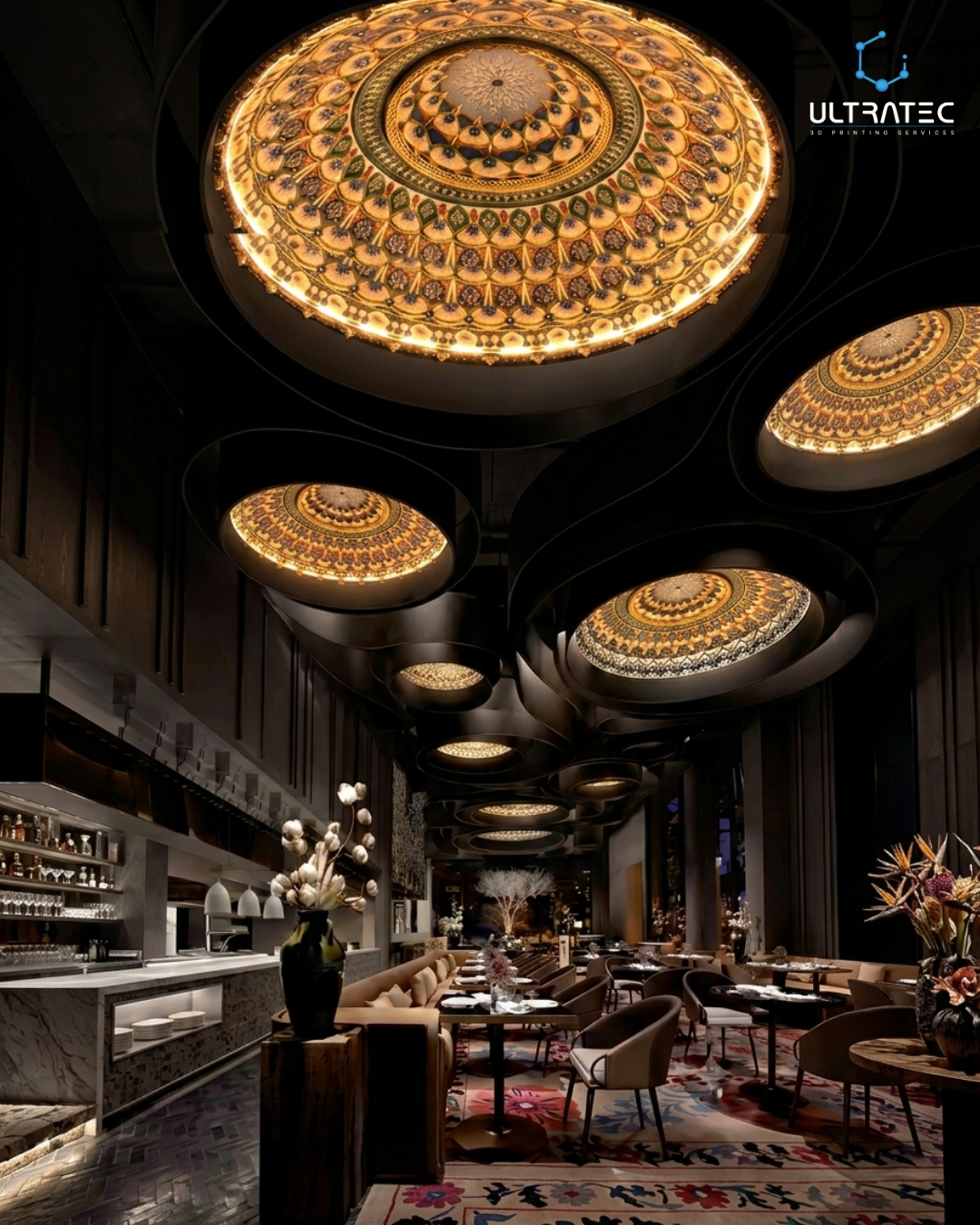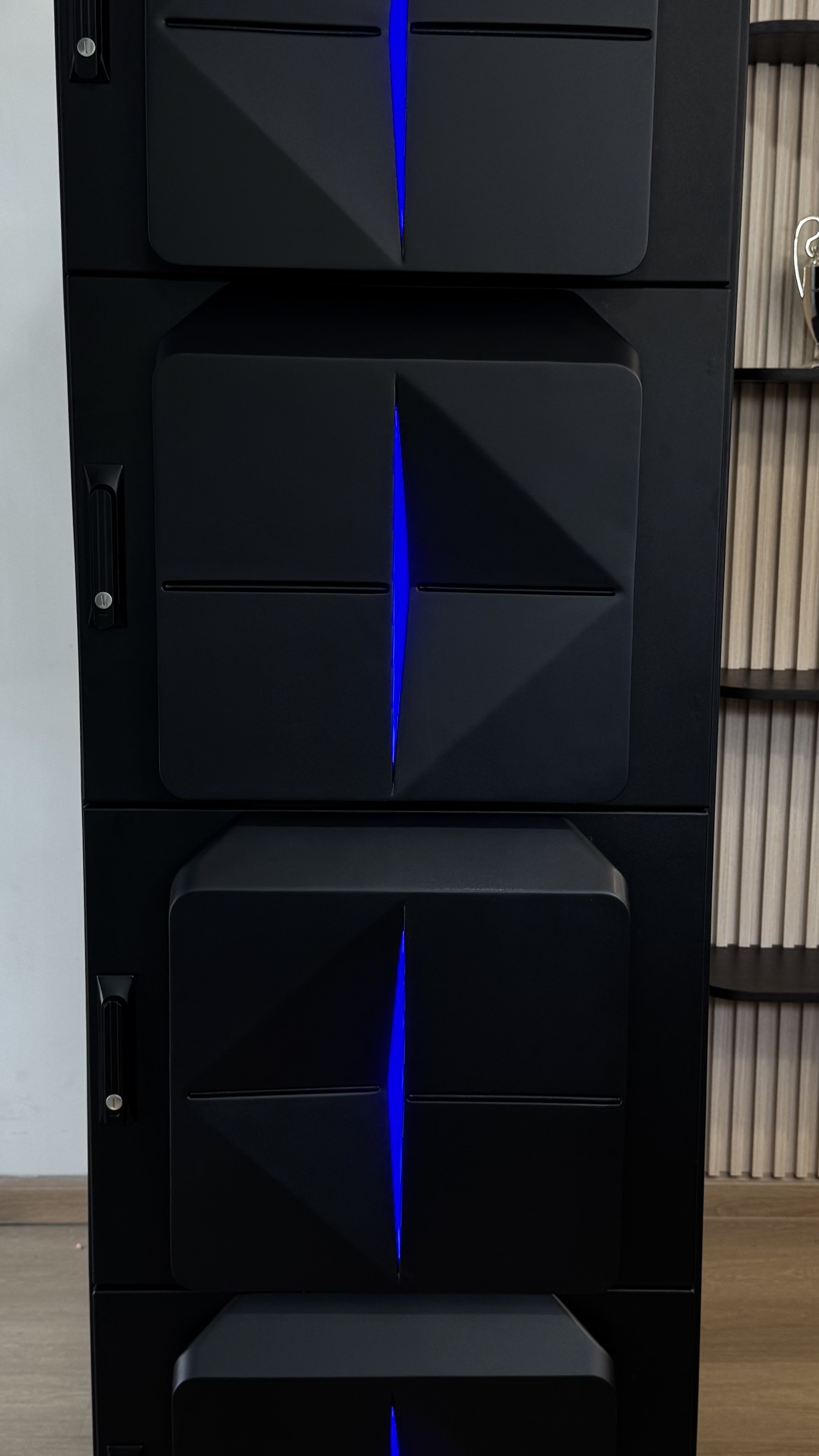
Today, 3D printing is opening new possibilities for architects, designers, and property developers to create bespoke environments that are both functional and visually striking. From statement walls to decorative features and custom partitions, 3D printing is transforming how interior spaces are designed and experienced.
Bringing Creative Freedom to Interior Design
Traditional fabrication methods often limit the complexity of patterns, textures, and forms that can be achieved within a project. With 3D printing, these limitations are significantly reduced, allowing designers to explore intricate geometries and fully customized concepts tailored to each space.
Whether inspired by organic forms, geometric patterns, cultural motifs, or contemporary aesthetics, 3D printed interior elements can be designed to complement the identity of a brand, hospitality venue, residential property, or commercial environment.
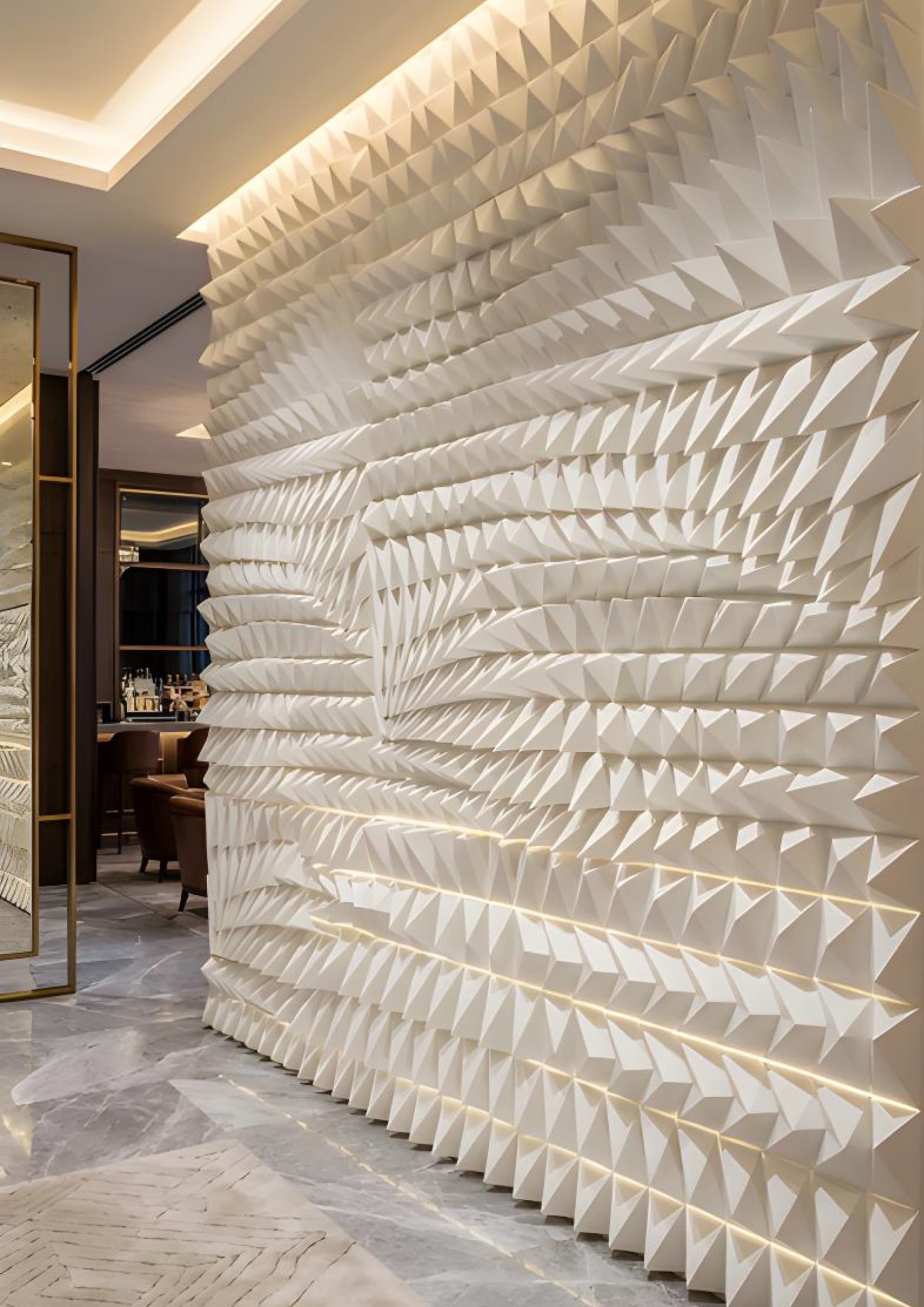
3D Printed Feature Walls That Make a Statement
Feature walls have become a focal point in modern interiors, and 3D printing elevates them to an entirely new level. Custom wall installations can incorporate unique textures, sculptural elements, and dimensional patterns that add depth and character to any setting.
These walls can be designed for:
- Hotel lobbies and reception areas
- Corporate offices and meeting spaces
- Retail environments and showrooms
- Restaurants and cafés
- Residential interiors and luxury villas
- Exhibition and event installations
The result is a distinctive visual experience that immediately captures attention and enhances the atmosphere of the space.
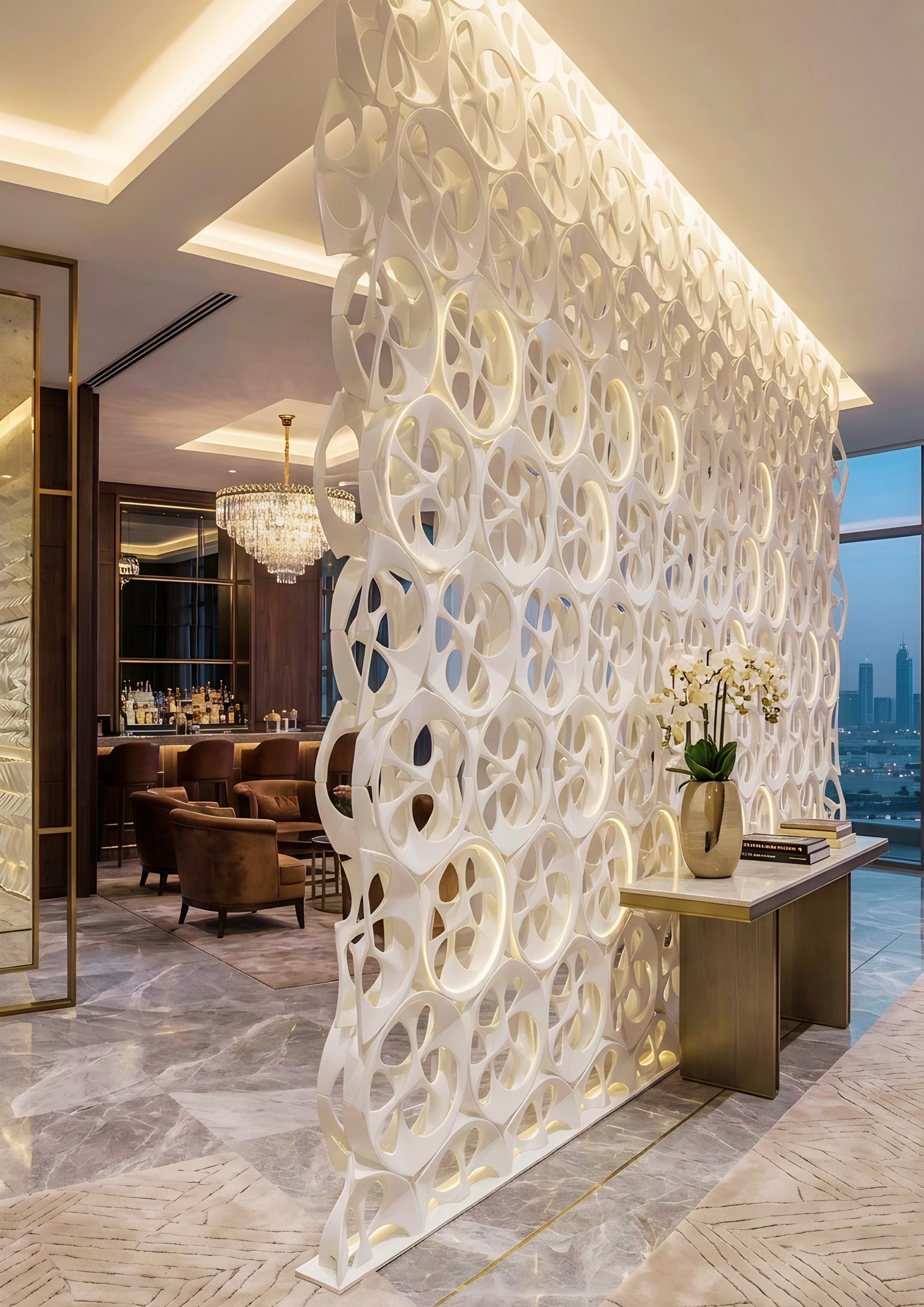
Functional and Elegant Decorative Partitions
Partitions serve an important role in defining spaces while maintaining openness and flow. Through 3D printing, partitions become more than practical dividers—they become architectural features in their own right.
Custom-designed partitions can provide:
- Privacy without sacrificing natural light
- Decorative focal points within open spaces
- Branded patterns and identity elements
- Flexible zoning for commercial interiors
- Contemporary design statements
From delicate lattice-inspired screens to bold sculptural forms, every partition can be tailored to suit the project's functional and aesthetic requirements.
Bespoke Decorative Elements with Unlimited Possibilities
One of the greatest advantages of 3D printing is the ability to create truly unique decorative pieces. Designers can move beyond mass-produced products and introduce customized elements that reflect the personality and purpose of a space.
Applications include:
- Decorative wall panels
- Sculptural installations
- Ceiling features
- Branded interior elements
- Artistic reliefs and motifs
- Customized architectural accents
Each piece is manufactured with precision, ensuring consistency and attention to detail throughout the project.
The Benefits of 3D Printing for Interior Applications
The adoption of 3D printing in interior design offers several advantages:
- Greater design flexibility and creative freedom
- Ability to produce complex geometries
- Customization for every project
- Efficient prototyping and production processes
- Reduced material waste compared to traditional methods
- Seamless integration of decorative and functional elements
These benefits make 3D printing an increasingly attractive solution for designers seeking innovative ways to enhance interior environments.
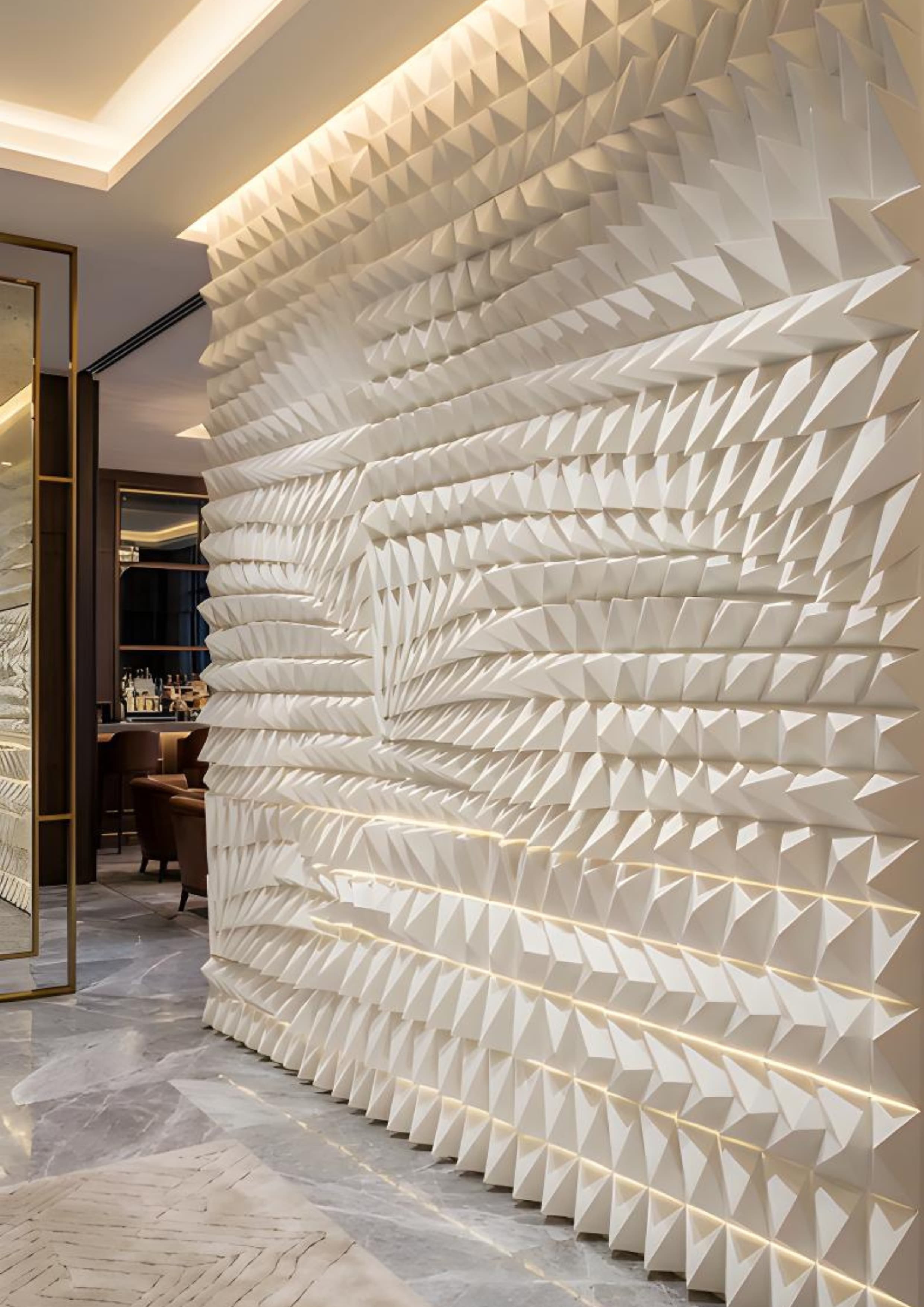
Shaping the Future of Interior Design
As architecture and interior design continue to embrace new technologies, 3D printed walls, decorations, and partitions are becoming powerful tools for creating immersive and memorable spaces. They enable designers to push creative boundaries while delivering practical solutions tailored to modern lifestyles and business needs.
From luxury hospitality projects and corporate environments to residential interiors and experiential spaces, 3D printing is redefining what is possible in interior design.
By combining advanced manufacturing with artistic vision, 3D printed interior elements transform ordinary spaces into extraordinary experiences—where functionality, innovation, and design come together seamlessly.