Introduction
Whether you're a startup founder in Dubai's tech scene, a mechanical engineer in Abu Dhabi, or an R&D manager sourcing for UAE projects, rapid prototyping services turn your CAD files into real, testable parts faster than traditional methods. At Ultratec3D, we help teams meet tight deadlines for investor pitches, functional tests, and concept demonstrations. This guide breaks down everything you need to know about rapid prototyping in the UAE.
What Is Rapid Prototyping?
Rapid prototyping uses additive manufacturing (3D printing) to quickly create physical versions of product ideas for testing and validation. In UAE innovation hubs like Dubai Silicon Oasis and Abu Dhabi's Masdar City, rapid prototyping helps teams iterate designs in days instead of weeks, saving time and reducing costly mistakes.
Rapid Prototyping vs. "Just 3D Printing"
While 3D printing is the technology, rapid prototyping is the complete process: selecting the right printing method, materials, post-processing, and testing. True rapid prototyping services involve expert DfAM (design for additive manufacturing) advice, multi-material options, and quality checks—ensuring prototypes perform as intended.
Types of Prototypes
- Looks-like prototype: Focuses on aesthetics for investor pitches or presentations, utilizing the best 3D printing in Dubai for smooth finishes via SLA.
- Works-like prototype: Tests functionality, like snap-fit assemblies, using FDM or SLS.
- Engineering prototype: Built for stress tests—metal 3D printing for heat resistance or MJF for precise tolerances.
Who Uses Rapid Prototyping Services in the UAE
Startups & Accelerators
UAE startups in accelerators like in5 Dubai or Hub71 Abu Dhabi use rapid prototyping to create physical demos for investors. A tangible prototype builds credibility and helps secure funding.
Engineering & Manufacturing Teams
Engineers in Jebel Ali or Mussafah use prototyping for fit and function testing without waiting for overseas samples. SLS or MJF parts handle stress tests, spotting failures early before expensive tooling.
Architecture & Real Estate
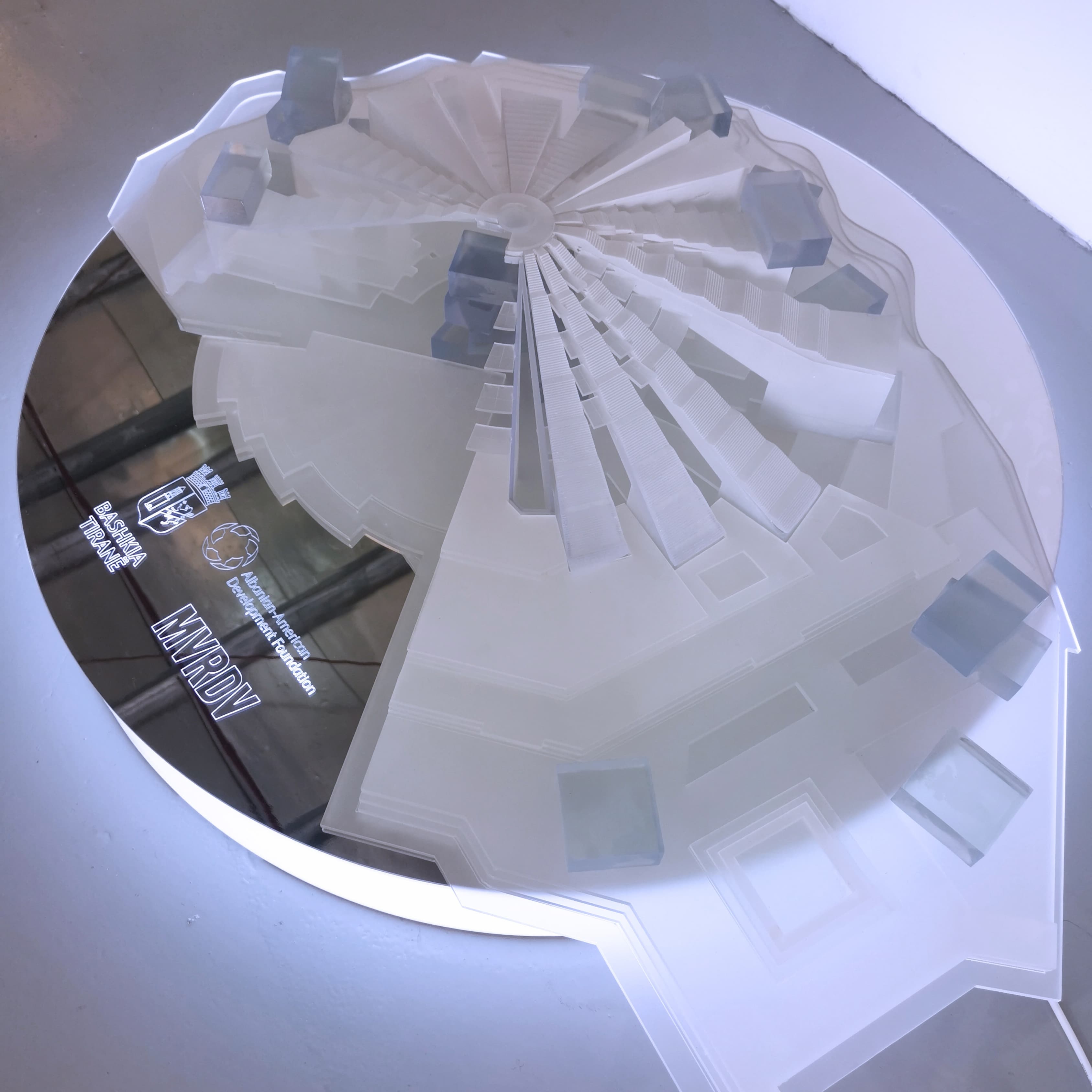
Dubai architects use scale models for client presentations and regulatory approvals. Detailed prototypes help stakeholders visualize projects and accelerate decision-making.
Medical, Automotive, Aerospace
Precision industries demand prototypes that meet strict regulations. Metal 3D printing for aerospace components or biocompatible resins for surgical guides ensure compliance and accuracy.
Benefits of Local UAE Rapid Prototyping
Local services eliminate shipping delays (1-5 days vs. 2-4 weeks overseas), customs complications, and timezone communication gaps. Faster iterations mean catching design issues early and getting to market quicker.
- Faster iterations: Test and refine designs within hours, not weeks
- Lower risk: Validate before investing in expensive tooling and molds
- Local logistics: Same-day delivery in Dubai, next-day across UAE
- Easy collaboration: On-site consultations and hands-on reviews
Rapid Prototyping Technologies
FDM: Fast and Budget-Friendly
Fused Deposition Modeling extrudes thermoplastic filament layer by layer. Ideal for early-stage concepts, jigs, and fixtures. Materials include PLA for concepts or ABS for durability. Best for initial fit checks and quick iterations.
SLA: High Detail & Smooth Finish
Stereolithography uses UV lasers to cure liquid resin, delivering ultra-smooth surfaces and fine details. Perfect for presentation models, architectural mockups, and medical prototypes where aesthetics matter.
SLS: Strong Nylon Parts
Selective Laser Sintering fuses nylon powder to create tough, flexible parts without supports. Great for functional testing like gears, snap-fits, and enclosures that withstand real-world conditions.
HP Multi Jet Fusion: Production-Grade Quality
MJF delivers near-production quality with excellent mechanical properties. Ideal for short production runs (50-500 units) and functional prototypes requiring tight tolerances and uniform strength.
Metal 3D Printing
Direct Metal Laser Sintering builds with metals like stainless steel or titanium. Essential for aerospace, oil & gas, and high-temperature applications where plastic materials fail.
Materials Guide
PLA vs ABS vs PETG
PLA: Biodegradable, easy to print, great for non-functional models but brittle and low-heat tolerant. ABS: Tougher, impact-resistant, heat-stable—ideal for functional enclosures. PETG: Combines strength with ease of printing, offers chemical resistance for medical or automotive parts.
Nylon & Composites
Nylon offers flexibility and wear resistance, perfect for hinges and gears. Composites (nylon with carbon fiber) provide higher stiffness and heat resistance for demanding engineering applications.
Resins
SLA resins offer clarity and fine details. Options include standard (rigid structures), flexible (gaskets), tough (impact resistance), and biocompatible (medical applications).
Our Rapid Prototyping Process
- File Review & DfAM: Upload STL, STEP, or IGES files. Our team reviews for printability issues and offers free optimization tips.
- Technology & Material Matching: We recommend the best technology and material based on your requirements and provide detailed quotes.
- Printing & Post-Processing: Parts are printed using industrial-grade equipment, then finished with sanding, painting, or other treatments as needed.
- Quality Checks: Every part undergoes inspection for accuracy and quality before delivery.
- Delivery: Same-day pickup in Dubai or 1-2 day delivery across UAE. Express shipping available for urgent projects.
Common Prototyping Mistakes to Avoid
- Wrong file type: Send STL or STEP files, not renders or images. Include proper units (mm) and orientations.
- Inadequate wall thickness: Designs with walls thinner than 1mm may break. Specify tolerances clearly.
- Choosing material by budget only: Match material to testing requirements, not just lowest cost.
- Ignoring post-processing: Specify surface finish requirements upfront for professional results.
How to Choose a Rapid Prototyping Partner
Key Criteria
- Speed: Consistent turnaround times
- Quality: ISO/QA certification and inspection processes
- Materials: Wide selection from plastics to metals
- Finishing: In-house post-processing capabilities
Questions to Ask
- What are your typical lead times for my volume?
- What tolerances do you guarantee?
- Do you reprint defective parts at no charge?
- Can you provide material certifications for regulatory compliance?
Frequently Asked Questions
How fast can I get a prototype in Dubai or the UAE?
At Ultratec3D, small FDM parts ship same-day in Dubai; complex MJF or metal takes 1-5 days UAE-wide. Factors like volume and finishing affect turnaround—express options are available for urgent needs like demo days.
What files do you need for rapid prototyping?
We accept STL for meshes, STEP/IGES for solids—export from CAD like SolidWorks or Fusion 360. Include units (mm) and orientations. If incomplete, our team optimizes free of charge.
What's the best material for functional testing?
For general testing, ABS (FDM) for impact resistance; Nylon (SLS/MJF) for flexibility and heat tolerance. MJF nylons excel in isotropic strength for load-bearing applications. Share your specs, and Ultratec3D recommends based on UAE conditions.
Can you help fix or optimize my CAD file before printing?
Absolutely—our DfAM service reviews for printability (e.g., adding supports, fixing thin walls). This service saves reprints and is commonly used by UAE engineering teams.
Do you offer post-processing like sanding, painting, and assembly?
Yes! In-house services include: sanding for smoothness, painting/coloring for visuals, assembly/inserts for functional prototypes, and specialized finishes for models—tailored for Dubai exhibitions or Abu Dhabi testing.
Can you print transparent or flexible parts?
Transparent: Clear resins (SLA) or PETG (FDM) for see-through casings. Flexible: TPU via FDM or elastomers in MJF/SLS for gaskets. Great for medical or automotive applications and durable in UAE heat.
When should I switch from prototyping to production?
After 3-5 iterations validating design—typically when you need 50-500 units. Use MJF for short runs; transition to CNC/molding for larger quantities. Ultratec3D advises based on your roadmap.